Master Key Cutting Techniques Using a Japanese Santoku Knife
Description
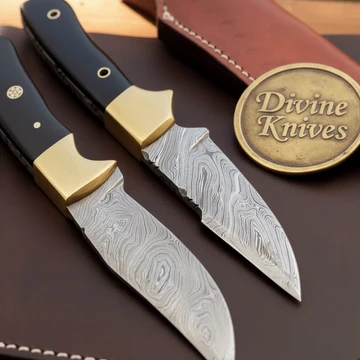
Owning a razor-sharp Santoku Knife is only half the equation for culinary success; mastering the specific cutting techniques engineered for its unique profile unlocks its true potential. The flat cutting edge, sheepsfoot tip, and compact balance of a Santoku demand refined cutting motions that differ from traditional Western chopping styles. At Divineknives, we design blades that empower cooks of all skill levels to achieve clean, uniform cuts with speed and confidence.
Learning proper hand placement, push-cutting strokes, mincing motions, and precision tip work elevates your kitchen efficiency while protecting your fingers. By practicing these foundational cutting techniques, you can process produce and meats faster while preserving the texture and appearance of your ingredients.
The Push-Cut Motion for Clean Slicing and Dicing
The primary cutting stroke designed for a Santoku Knife is the forward-and-downward “push-cut.” Unlike the rocking motion used with Western chef knives, the push-cut relies on moving the blade forward and down through the food in a single smooth motion, contacting the cutting board evenly across the flat belly.
To execute a push-cut, position the edge above the ingredient, push slightly forward while lowering the blade, and let the razor-sharp bevel do the work without pressing down forcefully. This technique produces extremely clean cuts on vegetables like cucumbers, zucchini, and celery without tearing or bruising cell walls. Divineknives ground every Santoku edge to ensure smooth, low-friction gliding during push-cut operations.
Fine Mincing and Vertical Chopping Dynamics
When processing high volumes of herbs, garlic, onions, or mushrooms, vertical chopping provides rapid prep output. Because a Santoku Knife features a broad blade face and flat cutting edge, you can perform swift up-and-down chopping motions across your cutting board without needing to anchor the tip.
For fine mincing, place your off-hand palm lightly over the downward-curved sheepsfoot spine near the tip while guiding the handle with your dominant hand. Swing the heel of the blade in rapid, controlled vertical arc strokes across chopped herbs. At Divineknives, our balanced blade weight ensures that vertical chopping remains light and controlled, preventing wrist fatigue during big prep jobs.
Using the Sheepsfoot Tip for Detail Work and Scoring
While the downward-curved sheepsfoot tip of a Santoku Knife is designed for safety, it is also a highly capable tool for intricate prep work. The tip’s low point alignment gives your hand direct spatial control, making it ideal for detailed tasks like removing pepper seeds, scoring meat fat caps, or trimming vegetable blemishes.
To use the tip effectively, choke up on the blade handle slightly and use gentle pressure with the front inch of the knife. The blunt spine allows you to rest a index finger safely along the top for pinpoint accuracy. Divineknives carefully finishes every tip profile to ensure delicate scoring and trimming tasks are executed with complete control.
The Claw Grip: Protecting Fingers and Ensuring Uniformity
Mastering proper off-hand positioning—known universally as the “Claw Grip”—is essential for both safety and cutting uniformity when using any sharp knife. Curl the fingertips of your non-knife hand inward like a bear claw, resting your knuckles flat against the smooth side of the Santoku blade while gripping the ingredient with your fingertips tucked safely behind.
As you cut, slide your claw hand backward along the food in uniform increments while keeping the flat blade face resting lightly against your knuckles. The wide blade height of a Santoku Knife provides a generous surface for your knuckles to guide against. Divineknives crafts wide blade profiles that make practicing the claw grip safe, comfortable, and intuitive for every cook.
Conclusion
Unlocking the full capabilities of your Santoku Knife requires combining authentic Japanese blade geometry with proper cutting techniques. By mastering the forward push-cut, vertical chopping, sheepsfoot tip scoring, and the protective claw grip, you transform daily prep into a swift, satisfying art form. At Divineknives, our hand-crafted kitchen knives are engineered to respond effortlessly to refined technique. Practice these foundational movements and take your culinary skills to a professional level.