Why Everyone’s Suddenly Obsessed With Pellet Smokers (And What Nobody Tells You Before You Buy One)
Description
So you’re thinking about getting a pellet smoker. Maybe you saw one at your neighbor’s cookout, or you watched some guy on YouTube pull a brisket off one that looked like it belonged in a magazine. Either way, here you are, trying to figure out if it’s actually worth the money or just another kitchen gadget that ends up collecting dust in the garage. Fair question. Let’s get into it.
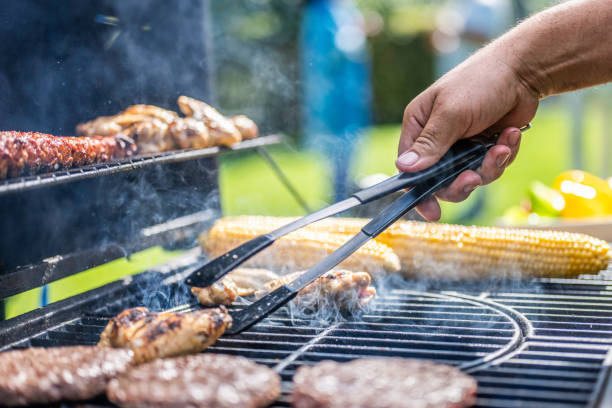
What A Pellet Smoker Actually Does
A pellet smoker runs on compressed wood pellets — little cylinders of hickory, oak, mesquite, whatever flavor wood you’re into — that get fed into a hopper and burned to create heat and smoke at the same time. There’s an auger inside that pushes pellets into a fire pot, a fan that keeps the airflow going, and a digital controller that keeps the temp locked in. That’s really it. No babysitting charcoal, no fighting with wind or rain, no staying up at 2am adding wood chunks because your fire dipped forty degrees while you were asleep.
Honestly, that’s the whole appeal. You set the temperature, you walk away, and the thing does its job. It’s not magic, it’s just consistency — which, if you’ve ever tried to run a stick burner for twelve hours straight, you know is worth its weight in gold.
Now here’s where people get it twisted. A pellet smoker isn’t going to give you the exact same smoke ring or bark as an offset smoker running straight oak logs. It’s close, and for 90% of people the difference doesn’t matter enough to justify the extra labor. But if you’re a purist who wants that deep, aggressive smoke flavor, you might find pellet smoke a little more subtle. Some folks solve that by adding a smoke tube for extra smolder. Others just don’t care because their brisket still disappears in twenty minutes at the family gathering anyway.
Why People Are Moving Away From Regular Grills
Look, a regular gas grill is fine. It’ll sear a steak, it’ll cook your burgers, nobody’s mad at it. But it’s kind of a one-trick pony. You can’t really low-and-slow a pork shoulder on a gas grill without turning it into a science project involving foil pans and indirect heat zones and a prayer.
A pellet grill blurs the line between smoker and grill. Most modern units can hit high heat for searing and also hold a low, steady temp for hours of smoking — same machine, two totally different jobs. That versatility is a big reason people are ditching their old propane setups. You’re not buying a smoker AND a grill anymore. You’re buying one thing that does both, reasonably well, without you needing three different tools stacked in your backyard.
The Case For Custom Grills
Here’s something a lot of first-time buyers don’t think about: off-the-shelf grills are built for the average person, cooking average amounts of food, in an average backyard. If you’re the guy who’s smoking for forty people every weekend, or you’ve got a specific space you’re trying to build into, a stock unit off a store shelf might not cut it.
That’s where custom grills come into the picture. A custom-built rig gets sized to what you actually need — bigger firebox if you’re cooking competition-level volume, specific steel gauge if you want it to last decades instead of years, custom shelving, wheels, whatever setup fits your actual cooking style instead of some generic template. It’s the difference between buying a suit off the rack and having one tailored. Both technically work. Only one actually fits you.
People assume custom means “fancy” or “unnecessary,” but really it just means built around your life instead of some average customer nobody actually is. If you cook a lot, or you cook weird — big cuts, whole hogs, competition trays — a custom grill setup solves problems a mass-produced unit never will.
Picking The Right Pellet Smoker Without Losing Your Mind
There’s a stupid amount of pellet smokers on the market right now, and honestly a lot of them are basically the same guts in a different shell with a different price tag slapped on. Don’t get suckered by flashy WiFi features if you’re not going to use them. Do pay attention to build quality — the hopper, the auger motor, how the metal holds up to weather.
Temperature consistency matters more than almost anything else. A smoker that swings wildly is going to wreck your cook, especially on long sessions like brisket or pulled pork where you’re committing 10+ hours. Read reviews, not just the five-star ones — read the ones where people had problems, because that tells you what actually breaks.
Size matters too, obviously. Buy bigger than you think you need. Everyone who buys a small unit ends up upgrading within a year because they underestimated how often they’d be cooking for a crowd. Ask anyone who owns one. They’ll tell you the same thing, practically word for word.
Maintenance Nobody Warns You About
Pellet smokers are low maintenance compared to other cooking methods, but “low” doesn’t mean “none.” You’ve gotta clean out the fire pot and empty the ash regularly or you risk clogs and uneven burns. Pellets absorb moisture like crazy, so store them somewhere dry — a bag left in a damp garage turns into sawdust mush real fast, and that’ll jam your auger.
Check your temperature probe accuracy every once in a while too. They drift over time, and nothing ruins a cook faster than trusting a reading that’s twenty degrees off from reality. It’s a small thing, takes five minutes, saves you a ruined dinner.
Where Custom Grills And Pellet Smokers Meet
Some of the best setups out there actually combine both worlds — a custom-built grill with pellet functionality baked right into the design. You get the tailored fit of a custom rig with the convenience of pellet-fed heat management. It’s not for everybody, price-wise it’s a bigger investment upfront, but if you’re serious about backyard cooking or you’re running something more like a small operation, it pays for itself in the amount of frustration it removes from your life.
At the end of the day, whether you go with a straightforward pellet smoker or step up into a fully custom build, the goal’s the same — better cooks, less stress, more time actually enjoying the food instead of babysitting a fire.
If you’re ready to stop guessing and actually get equipment built for how you cook, check out Lone Star Grillz. They build serious pellet smokers and custom grills that are made to last, not just look good on a showroom floor.
FAQs
1. Are pellet smokers worth the extra cost compared to a basic charcoal grill?
For most people, yes. You’re paying for consistency and convenience — set the temp and walk away instead of babysitting coals for hours. If you cook often, that time savings adds up fast.
2. How long do wood pellets last during a long smoke session?
Depends on the smoker and the temp you’re running, but a full hopper generally gets you anywhere from 10 to 20 hours at low-and-slow temps. Higher heat burns through pellets quicker.
3. Is a custom grill actually better, or is it just marketing?
It’s not just marketing if you have specific needs — high volume cooking, unusual space constraints, or you want something built to outlast a mass-produced unit. If you’re a casual backyard cook, a standard model might be all you need.
4. Can a pellet smoker handle high-heat searing, or is it only good for low and slow?
Most modern pellet smokers can hit searing temps, though it varies by model. Some run hotter than others, so if searing steaks is a priority, check the max temperature rating before buying.