What Nobody Tells You About Moving From Prototype To Production
Description
The prototype worked, the demo went well, and the order size jumped from ten boards to ten thousand. That success is exactly when many hardware programs hit a wall nobody warned them about: the supplier that built the prototype cannot build the volume, and the transition costs weeks that the schedule never planned for.
The move from a handful of boards to a production run is where good programs stall. Knowing the traps in advance is the only way around them, and most of those traps are set during supplier selection long before volume is ever discussed.
The Assumption That Breaks Programs
Teams assume a prototype vendor will simply scale with them. Often it will not. A prototype PCB board manufacturer tuned for quick-turn samples may lack the line capacity, process breadth, or certifications a production program demands, and none of that is obvious from a clean prototype run. A perfect set of five boards says nothing about whether the same shop can hold quality across five thousand.
By the time the gap appears, the design is validated and locked. Switching suppliers now means requalifying everything, under deadline pressure, with a customer already expecting delivery. What should have been a simple scale-up becomes a scramble to rebuild a supply relationship from zero.
What A Supplier Switch Actually Costs
Moving a proven design to a new production shop is never a clean handoff. The board that sailed through prototyping arrives at the new supplier as an unknown quantity, and the shop has to earn confidence in it all over again. The hidden work includes:
- A rebuilt process, with a new stencil, new paste profile, and new placement programs
- Fresh first articles, built and evaluated against the original acceptance criteria
- Component resourcing, since a new shop buys from different distributors and substitutions creep in
- Regenerated validation, when regulated programs must repeat approvals a design change invalidated
Each item eats schedule, and together they can erase the time a successful prototype was supposed to buy.
Separating The Bare Board From The Build
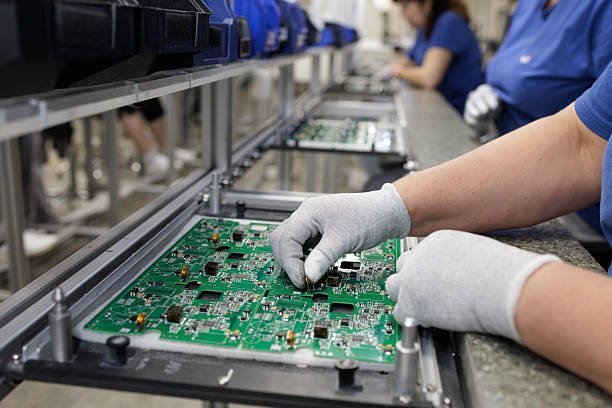
One detail catches teams off guard. Fabricating the bare board and assembling it are two different operations, sometimes at two different companies. A PCB printing service produces the raw board, and a separate shop populates it, which means quick-turn prototype lead times may not hold once panel quantities climb. A five-day turn on a few boards can stretch into weeks when the order grows, catching a program short.
A partner that coordinates fabrication and assembly under one agreement removes that seam. It also removes the ambiguity that appears when a defect could belong to either the board or the build. A capable PCB printing service paired with in-house assembly means one party answers for the finished product rather than two trading blame.
Capabilities To Confirm Before You Commit
The right time to check production readiness is before the first prototype order, not after the design is frozen. Worth confirming up front:
- Volume range, meaning the supplier can quote the same board at ten, one hundred, and one thousand units without hesitation
- Process breadth, covering surface mount, through-hole, selective soldering, and conformal coating as the product matures
- Certifications, including ISO 9001, AS9100, and ITAR registration if the program may enter regulated markets
- Order flexibility, so a single supplier serves the first article and the full run alike
Reading The Warning Signs Early
A supplier that cannot follow a program upward usually reveals it before the first order, if a buyer knows what to listen for. Hesitation when asked for pricing at higher volumes is one signal. Vague answers about certifications are another. A shop that quotes only assembly and stays quiet on fabrication is telling the customer where its limits sit. These tells are easy to miss when a prototype looks clean, but they predict exactly where a program will stall months later.
Choosing Once Instead Of Twice
The cheapest path through a hardware program is to pick a supplier that spans the whole arc rather than switching midstream. A prototype PCB board manufacturer that already holds production certifications and volume capacity turns the scale-up from a crisis into a purchase order. Evaluating that partner against production criteria at the start costs nothing but a few pointed questions, and it buys a straight path from first article to full volume. The prototype stage is the moment to choose, while the design is still fluid.
MJS Designs, Inc. is committed to providing the best in prototype and production electronics manufacturing, with quick-turn prototypes, coordinated fabrication and assembly, and full production builds under ISO 9001:2015, AS9100D, and ITAR registration with no minimum order. With MJS Designs, engineers gain a reliable, top-tier partner ready to carry a program from first article to full volume without a costly supplier change.