VisiFlora Review: What to Know Before Trying This Formula
Description
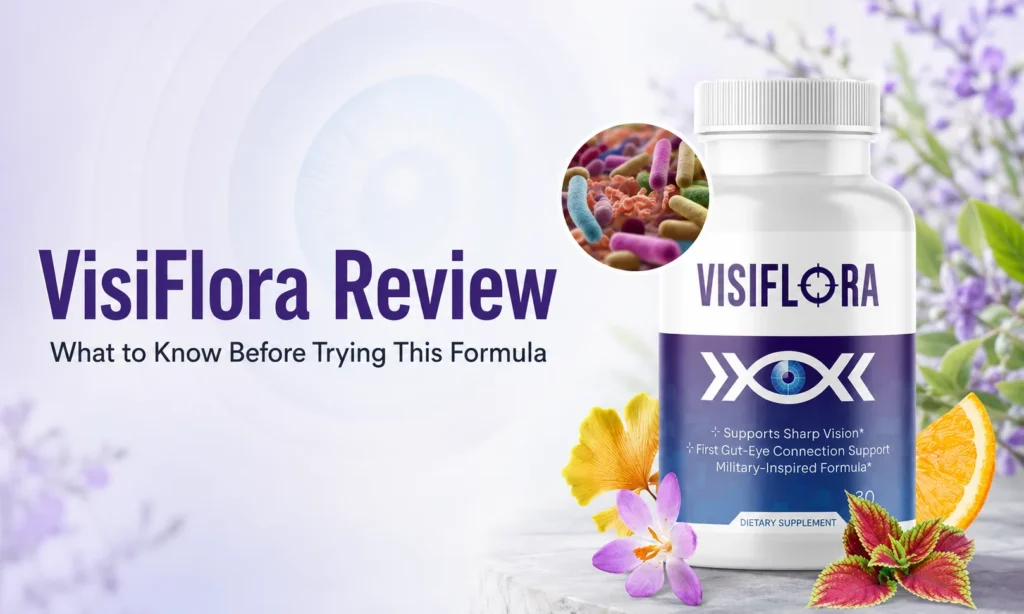
Our eyes work hard every day. We use phones, computers and televisions for hours. Aging, poor sleep, bright light and environmental conditions can also make the eyes feel tired or uncomfortable.Because of this, many people use eye vitamins and supplements to support their vision health. VisiFlora is one product made for this purpose. It contains vitamins, antioxidants, minerals and plant-based ingredients.
But can VisiFlora really support your eyes? Are its ingredients useful? And what should you check before trying it?
This VisiFlora review explains the product in simple language. It covers its ingredients, claimed benefits, limitations and safety considerations. It will help you make a more informed decision without relying only on promotional claims.
Quick Overview: Is VisiFlora Worth Considering?
VisiFlora may be worth considering if you want a supplement that contains several nutrients associated with eye health.
According to the product website, its formula contains lutein, zeaxanthin, vitamins C and E, zinc, bilberry and other plant-based ingredients. These nutrients are often used in vision supplements.
However, VisiFlora should not be treated as a cure for poor eyesight or an eye disease. The available product page does not clearly show the amount of every ingredient. It also does not provide a published clinical trial performed on the complete formula.
For this reason, VisiFlora should be viewed as a general eye-support supplement. It cannot replace eye examinations, prescription glasses or medical treatment.
Key Takeaways
- VisiFlora is a dietary supplement designed to support general eye health.
- It contains vitamins, minerals, antioxidants and plant extracts.
- Its main ingredients include lutein, zeaxanthin, vitamins C and E, zinc and bilberry.
- The product may provide nutritional support, but results can differ between users.
- The claims on the product website should not be treated as guaranteed results.
- VisiFlora is not the same as a medically recommended AREDS2 supplement.
- Ask a healthcare professional before using it if you take medicines or have an eye condition.
- Check the complete product label before placing an order.
What Is VisiFlora?
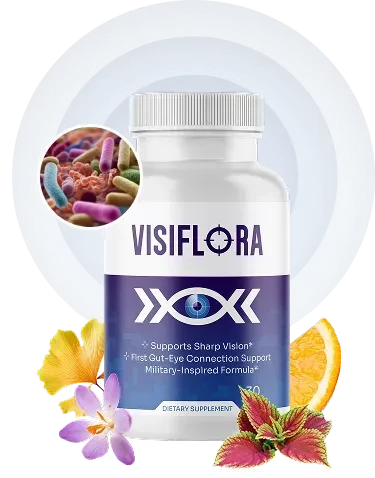
VisiFlora is a vision care supplement. It is marketed to adults who want to maintain healthy eyes and comfortable vision.
The company says the formula supports:
- The retina
- The macula
- The optic nerve
- Healthy circulation around the eyes
- Everyday visual comfort
- The connection between gut and eye health
The retina is the light-sensitive tissue at the back of the eye. The macula is the central part of the retina that helps you see fine details. The optic nerve carries visual information from the eyes to the brain.
The VisiFlora formula overview says the product combines vitamins, antioxidants and plant nutrients to support these important parts of the eye.
These are claims made by the company. They do not prove that the supplement can repair damaged eyes, improve a prescription or treat an eye disease.
What Ingredients Are Found in VisiFlora?
The product website names several VisiFlora ingredients. However, it does not clearly display the amount of every ingredient on the accessible page.
This is important because an ingredient’s amount can affect both its usefulness and safety. Buyers should read the current Supplement Facts label before using the product.
Lutein and zeaxanthin
Lutein and zeaxanthin are natural pigments called carotenoids. They are found in foods such as spinach, kale, peas, corn and egg yolks.
These nutrients are also naturally present in the retina. They help form the eye’s macular pigment, which plays a role in filtering light and supporting retinal health.
The National Institutes of Health confirms that lutein and zeaxanthin collect in the retina. However, their presence in VisiFlora does not prove that the product will improve a person’s eyesight.
The amount included in the formula is also important, but that amount is not clearly shown on the accessible product page.
Vitamins C and E
Vitamins C and E are antioxidants. Antioxidants help protect cells from damage caused by unstable molecules known as free radicals.
The eyes are regularly exposed to light and oxygen, so antioxidant nutrients are commonly included in vision supplements.
However, more is not always better. If you already take a multivitamin or another eye supplement, check whether you are getting these vitamins from multiple products.
Zinc, copper and selenium
VisiFlora also includes minerals such as zinc, copper and selenium. The website specifically mentions 11 mg of zinc.
Zinc supports several normal processes in the body, including immune health and cell function. It is also present in eye tissues.
Copper is sometimes included in eye formulas containing zinc. Selenium supports the body’s antioxidant systems.
The website does not clearly show the amount of copper or selenium. Users should confirm those amounts on the current label.
Bilberry fruit extract
Bilberry is a dark-colored fruit related to the blueberry. It contains plant compounds called anthocyanins.
Bilberry is often promoted for circulation and eye health. However, evidence for many popular bilberry claims remains limited. Its inclusion should not be taken as proof that VisiFlora will improve night vision or visual clarity.
Astaxanthin, beta-carotene and lycopene
These ingredients belong to the carotenoid family.
Astaxanthin is a red-colored antioxidant found naturally in some seafood and algae. Beta-carotene can be converted into vitamin A by the body. Lycopene is the red pigment commonly found in tomatoes.
All three have antioxidant properties. Still, the benefit of a finished supplement depends on the ingredient amounts, quality and overall formula.
Saffron extract
Saffron is a spice made from the Crocus sativus flower. It is used in food and has also been studied for different health purposes.
The VisiFlora website connects saffron with retinal support. However, buyers should not assume that the finished product provides the same results as a study involving a particular saffron extract and dosage.
Ginkgo biloba and coleus forskohlii
These plant extracts are included in the formula for circulation-related support.
The product website makes a precise claim about them producing “23% clearer vision.” However, the page does not provide enough information to confirm that result for the complete VisiFlora supplement.
Precise improvement claims should be supported by research on the finished product. Until such evidence is available, this percentage should be treated as advertising language rather than an expected result.
Taurine and alpha-lipoic acid
Taurine is an amino acid-like substance naturally present in the body, including in eye tissues. Alpha-lipoic acid is an antioxidant compound involved in cellular processes.
VisiFlora includes these ingredients as part of its eye and antioxidant support formula. Their presence does not mean the product can repair retinal damage.
What Is the Gut–Eye Connection?
VisiFlora places strong focus on the “gut–eye connection.”
The gut contains a large community of bacteria and other microorganisms. This community is called the gut microbiome. It helps with digestion, nutrient absorption and other body functions.
Researchers are studying how gut health may be connected with inflammation and eye health. This is an interesting area of research, but it is still developing.
It is important to understand the difference between general research and product evidence. Research about the gut and eyes does not automatically prove that VisiFlora changes gut bacteria or improves vision.
No completed clinical trial of the full VisiFlora formula was found in the product information reviewed for this article.
Possible VisiFlora Benefits
VisiFlora may offer some practical advantages as a nutritional supplement.
Supports general eye nutrition
The formula contains nutrients commonly associated with the retina and macula. These include lutein, zeaxanthin, zinc and antioxidant vitamins.
Combines multiple ingredients
VisiFlora puts vitamins, minerals and plant extracts into one formula. Some users may find this more convenient than taking several separate supplements.
Provides antioxidant nutrients
Its ingredients include several antioxidants. These nutrients help support the body’s normal protection against oxidative stress.
Fits into a daily wellness routine
A vision supplement may be easy to include in an existing health routine. Users should follow the directions printed on the actual bottle.
Focuses on more than one area
The formula is marketed for eye nutrition, circulation, visual comfort and gut-related wellness. This broad approach may appeal to people looking for an all-in-one product.
These are possible advantages, not guaranteed benefits. Individual experiences can vary.
Can VisiFlora Improve Eyesight?
VisiFlora should not be expected to correct eyesight problems such as nearsightedness, farsightedness or astigmatism. These problems usually require glasses, contact lenses or other professional care.
The supplement also cannot be assumed to prevent or treat glaucoma, cataracts, macular degeneration or diabetic eye disease.
Some ingredients may provide nutritional support for healthy eye tissues. That is different from improving a person’s glasses prescription or reversing an existing condition.
If you notice blurry vision, increasing glare, eye pain or other changes, arrange an eye examination instead of depending on a supplement.
Is VisiFlora an AREDS2 Supplement?
VisiFlora should not automatically be considered an AREDS2 formula.
AREDS2 is a specific combination of vitamins and minerals studied by the National Eye Institute. It was created for certain people with age-related macular degeneration, commonly called AMD.
According to the National Eye Institute, AREDS2 supplements may help some people with intermediate or late AMD. They have not been shown to benefit people who do not have AMD or those with early AMD.
VisiFlora contains some nutrients also discussed in eye-health research. However, that does not make the two formulas equal.
Only an eye doctor can determine whether an AREDS2 supplement is suitable for a particular patient.
Limitations of VisiFlora
A reliable VisiFlora review must also consider what is missing.
Ingredient amounts are unclear
The website names many ingredients but does not clearly provide the amount of each one. Without this information, it is difficult to judge the complete formula.
No visible finished-product trial
Research may be available for individual ingredients, but that does not prove that the complete VisiFlora formula produces the advertised results.
Some claims are too strong
Statements about repairing the retina, sharpening sight or producing an exact improvement need strong product-specific evidence. Such evidence is not clearly presented on the accessible website.
Product information is occasionally inconsistent
The website refers to the formula as “drops” in one section, while other information suggests a more conventional supplement format. Buyers should confirm the product form, serving size and directions before ordering.
It cannot diagnose a problem
Eye fatigue and blurry vision can have many causes. These include dry eyes, poor lighting, an outdated prescription, diabetes and certain eye diseases. A supplement cannot identify the cause.
Safety Considerations
Dietary supplements can cause side effects and interact with medicines. “Natural” does not always mean risk-free.
Speak with a doctor, pharmacist or qualified eye professional before using VisiFlora if you:
- Take prescription medication
- Use blood-thinning medicine
- Take medication for blood pressure or blood sugar
- Already use vitamins or another eye supplement
- Are pregnant or breastfeeding
- Have an eye disease or another medical condition
- Are planning surgery
- Have an allergy to herbs or botanical extracts
The VisiFlora website mentions that some users may experience temporary bloating or stomach discomfort. This is a statement from the seller and should not be viewed as a complete list of possible side effects.
Stop using the supplement and seek advice if you experience an unexpected reaction.
Sudden vision loss, severe eye pain, flashing lights, many new floaters or a dark curtain across your vision can be urgent warning signs. Seek immediate medical care if any of these occur.
VisiFlora Compared With Other Eye-Health Options
| Option | Main purpose | Advantage | Limitation |
|---|---|---|---|
| VisiFlora | General vision nutrition | Contains multiple eye-related nutrients | Full amounts and product-specific evidence are unclear |
| Standard multivitamin | General nutritional support | Simple and widely available | May contain few eye-focused ingredients |
| AREDS2 formula | Support for certain stages of AMD | Studied in a specific patient group | Not suitable or necessary for everyone |
| Healthy diet | Provides nutrients through food | Supports overall health | Cannot replace treatment |
| Eye examination | Finds vision problems and eye diseases | Helps identify the actual cause | Requires professional evaluation |
A supplement and an eye examination serve very different purposes. One provides nutrients; the other can detect problems that may require treatment.
What to Check Before Trying VisiFlora
Before placing an order, take these steps:
- Read the Supplement Facts label. Check every ingredient and its amount.
- Confirm the serving directions. Follow the bottle rather than an online review.
- Compare it with your other supplements. Avoid taking unnecessary duplicate nutrients.
- Ask about medicine interactions. A pharmacist can review the ingredient list.
- Check the return policy. The website promotes a 60-day guarantee, but review the latest terms and return requirements.
- Set realistic expectations. A supplement may support nutrition, but it cannot correct every vision problem.
- Continue regular eye care. Supplements should be used alongside—not instead of—healthy habits and professional examinations.
Frequently Asked Questions
1. What is VisiFlora designed to do?
VisiFlora is designed to provide nutritional support for the eyes. The company says it supports the retina, macula, visual comfort and gut–eye connection.
2. What are the main VisiFlora ingredients?
The website names lutein, zeaxanthin, vitamins C and E, zinc, bilberry, saffron, taurine, alpha-lipoic acid and several other plant extracts.
3. Does VisiFlora cure poor eyesight?
No. VisiFlora is a dietary supplement. It should not be used to cure eyesight problems or replace glasses, medical treatment or eye examinations.
4. Can it help with tired eyes from screen use?
The product is marketed for eye comfort, but screen-related fatigue may have several causes. Taking breaks, blinking regularly, adjusting lighting and checking your prescription may help more directly.
5. Is VisiFlora the same as AREDS2?
No. AREDS2 is a specific studied formula for certain people with AMD. Do not assume VisiFlora provides the same ingredients or amounts.
6. Is VisiFlora safe to take every day?
The seller presents it as a daily supplement. However, safety depends on the complete dosage, your health and any medicines you use. Ask a healthcare professional when unsure.
7. How quickly does VisiFlora work?
The website suggests that users may notice changes within several weeks. This is a company claim, and no result or timeline can be guaranteed.
8. Where can buyers check the current details?
Buyers can review the current VisiFlora product information. They should also inspect the bottle label and checkout conditions before using the product.
Final Verdict
VisiFlora contains several ingredients commonly found in eye supplements. Lutein, zeaxanthin, vitamins C and E, zinc and plant antioxidants give it a clear vision-health focus.
Its main weakness is the lack of easily available dosage information for every ingredient. The product page also does not show a published clinical trial testing the complete formula. Therefore, its advertised benefits should be treated as company claims, not guaranteed outcomes.
VisiFlora may be an option for adults looking for general nutritional eye support. Before trying it, check the complete label and discuss it with a healthcare professional—especially if you use medication or have an existing eye condition.