Stethoscope with Digital Display: Why Visual Auscultation Is Changing Diagnostics
Description
Speak to any physician about what makes auscultation genuinely difficult, and the answer usually isn’t hearing a sound — it’s trusting it. A murmur that seems present for a beat and then fades. A faint crackle that could point to fluid, or might just be ordinary chest movement. This kind of uncertainty has followed clinicians for as long as the stethoscope has existed. A stethoscope with digital display is one of the first real advances to address that problem directly, not by replacing clinical judgment, but by giving the ear something it has never had before: a visual second opinion.
This distinction is worth pausing on. Trained hearing has always been the foundation of auscultation, and that hasn’t changed. But hearing has natural boundaries — long shifts bring fatigue, busy wards bring noise, and some sounds are simply too subtle to catch with certainty every time. A digital display doesn’t question what the clinician hears. It supports it with evidence.
What a Digital Display Actually Adds
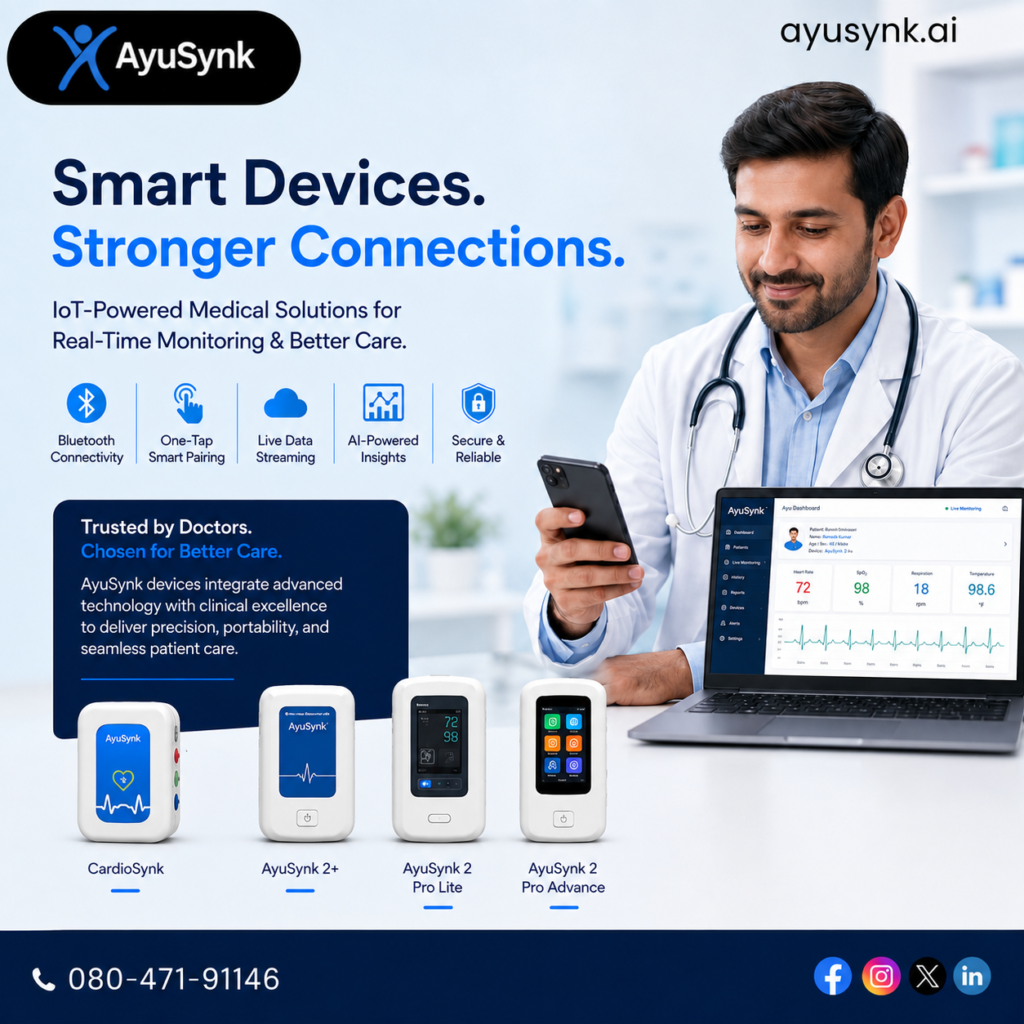
At its core, this kind of stethoscope picks up sound electronically and turns it into a live waveform, displayed either on a built-in screen or through a connected app. Instead of relying purely on auditory judgment, a doctor can now watch the rhythm, timing, and shape of heart and lung sounds as they happen.
This isn’t a minor add-on. A waveform reveals patterns the ear can miss in a rushed moment — an extra beat hidden inside a normal rhythm, an uneven breathing cycle, or a murmur too faint to fully register by sound but unmistakable once seen. For a digital electronic stethoscope, pairing audio with visual feedback is fast becoming one of its most practical strengths.
Why Seeing the Sound Changes the Exam
Less Doubt, More Confidence
Almost every clinician knows the moment of hesitation — was that a real finding, or noise bleeding in from outside the room? A waveform settles that question quickly. When the visual lines up with what was heard, the finding carries more weight. When it doesn’t, that gap is itself worth noting.
A Better Way to Teach
Sound is genuinely hard to explain in words. A waveform removes that barrier. When a student or junior doctor needs to grasp what an irregular heart sound actually looks like, a shared visual communicates it faster than any verbal description could. This is why a stethoscope with digital display has real value in teaching hospitals, where building an accurate ear takes years of repeated exposure.
Documentation That Holds Up
Clinical notes almost never capture the full texture of what was heard during an exam. A saved waveform does. It can be stored, reviewed weeks later, or attached to a patient’s file, forming a more reliable record than a short written line ever could — especially useful when tracking how a murmur changes across multiple visits.
Telemedicine That Feels Less Limited
In a remote consultation, a doctor obviously can’t examine a patient’s chest directly. But if a connected device is used on-site — by the patient or a visiting nurse — the physician can view the resulting waveform in real time or shortly after. That gives a remote exam a layer of objective data it would otherwise lack entirely.
Where This Makes the Biggest Clinical Difference
Cardiology follow-ups benefit early and often. Heart conditions are typically monitored over months or years, and a visual history of how a rhythm or murmur has shifted gives doctors something concrete to compare — far more reliable than relying on memory from a prior appointment.
Respiratory and pulmonary care see similar gains. Wheezes, crackles, and reduced breath sounds are genuinely hard to put into words accurately. A waveform provides a more consistent way to track how conditions like asthma or COPD evolve.
Medical training is arguably where this technology shows its clearest value. Auscultation skill comes from repetition and exposure, and for students still building a trained ear, seeing an abnormal sound alongside hearing it shortens that learning curve considerably.
Specialist referrals become more efficient too. Rather than trying to describe a finding over a phone call, a general physician can share a recorded waveform directly with a specialist, letting them assess it with precision before the patient even walks in for a follow-up.
Digital Display vs. Amplification: Two Different Problems
It helps to separate these two features clearly, since they’re often bundled together. A stethoscope with amplifier solves the problem of faint, hard-to-hear sound by making it louder and clearer. A digital display solves a different problem — the subjectivity of interpretation — by making sound visible. Together, they address two separate weaknesses in traditional auscultation.
Several current devices bring both together in a single unit. The AyuSynk 2 Pro Advance combines amplified sound with app-based waveform visualization and Bluetooth connectivity, while a simpler wireless digital stethoscope may prioritize portability for routine daily rounds instead.
What to Look for Before Buying
A few practical questions are worth asking before choosing a device:
- Live waveform or recorded playback only? Real-time display is more useful during an active exam than reviewing sound afterward.
- Built-in screen or app-dependent? A built-in display is convenient for quick bedside checks; an app often gives deeper analysis and storage options.
- Can recordings be saved and shared? This matters for documentation, training, and tracking a patient’s condition over time.
- Does it also amplify sound? For most clinical use, pairing clear visuals with clear, amplified audio gives the fullest picture.
- How stable is the connection? A display that lags or drops mid-exam undercuts the entire point of the feature.
A Small Screen, A Genuinely Different Exam
It’s easy to underestimate how much a simple visual layer changes clinical listening. But for doctors who’ve actually used one, the difference shows up quickly — less hesitation, stronger documentation, and an easier way to walk a colleague, student, or patient through a finding.
As Indian healthcare keeps moving toward more connected, data-supported tools, the stethoscope with digital display stands out as a practical step forward — not a substitute for clinical skill, but a way of reinforcing it with something the ear alone has never been able to offer on its own: a clear, visual confirmation of what’s happening inside the chest.
Contact us
Call now:08047191146
Website:https://ayusynk.ai
Address:2nd floor, ICICI Bank, metro station, Gubbalala Main Rd, above SBI BANK, near ksit college, Raghuvanahalli, Bangalore City Municipal Corporation Layout, Bengaluru, Karnataka 560062