What Causes Gas Line Pressure Drops After New Pipe Installation?
Description
A newly installed gas line should deliver fuel steadily from the supply point to every connected appliance. Yet, when a stove struggles to ignite, a water heater cycles unexpectedly, or a burner produces a weak flame soon after new piping is installed, the problem may not be the appliance at all. A pressure drop somewhere within the new gas piping system can restrict the fuel reaching the equipment.
Understanding why this happens requires looking beyond the visible pipe. Gas pressure depends on pipe sizing, system layout, fittings, connections, regulators, appliance demand, and the condition of the entire distribution system. Identifying the cause matters because improper gas pressure can affect appliance performance and create serious safety concerns. This guide examines the most common reasons pressure drops occur after new pipe installation and explains what a qualified professional should check.
Incorrect Gas Pipe Sizing
One of the most common causes of pressure loss is undersized piping. Gas must travel through the pipe fast enough to meet the connected appliances’ demand. If the pipe diameter is too small for the required gas flow and distance, friction within the piping can cause pressure to decline before the gas reaches the appliance.
Proper sizing should account for the total developed length of the piping system, the type of gas being supplied, inlet pressure, allowable pressure drop, and the demand of each connected appliance.
During a professional gas pipe installation, technicians should calculate the required capacity rather than selecting pipe dimensions based only on the existing line. Adding a high-demand appliance to an improperly sized system can make an existing pressure problem even more noticeable.
Excessive Pipe Length or Complex Routing
Gas pressure can also decline when gas travels through a long or complicated piping route. Every section of pipe contributes resistance to flow, while fittings, elbows, tees, valves, and other components can add equivalent length to the system.
For example, a new line may appear adequately sized based on its diameter but still experience pressure loss because it takes a much longer route than anticipated. A system with numerous turns may also have greater resistance than a simpler layout.
This is why you should evaluate pipe sizing against the complete system design rather than individual sections in isolation.
Too Many Appliances Sharing the Same Line
A gas piping system must supply all connected appliances when they operate simultaneously at their expected demand.
Suppose a property has a gas range, furnace, water heater, fireplace, and outdoor appliance connected to the same distribution system. If the new piping was not designed for the combined load, pressure may fall when multiple appliances operate at once.
A pressure problem that appears only during periods of high demand can be an important diagnostic clue. A technician may test the system under different operating conditions to determine whether the available gas supply meets the connected load.
Regulator Problems
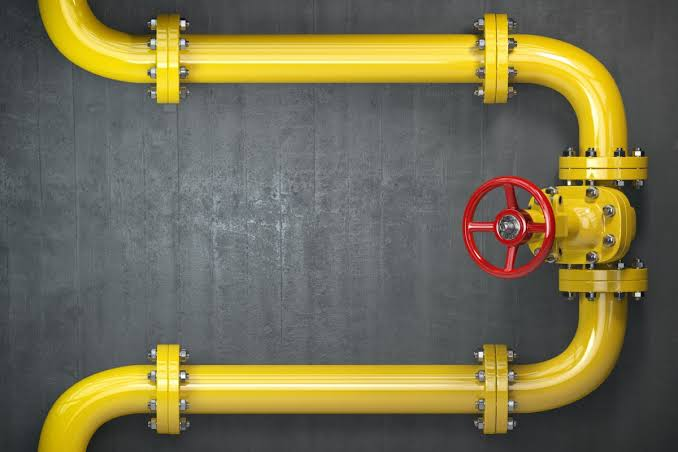
The regulator plays an important role in maintaining appropriate gas pressure within the piping system. If a regulator is incorrectly adjusted, malfunctioning, restricted, or improperly selected for the application, pressure may not remain within the required range.
A new pipe installation does not automatically eliminate problems with existing components. In some cases, new piping changes the system’s flow characteristics enough to reveal a regulator issue that was previously less noticeable.
Because gas regulators are safety-critical components, a qualified professional should evaluate their condition and adjustment rather than alter them without the appropriate technical knowledge.
Partially Closed or Restricted Valves
A valve that is not fully open can restrict gas flow and contribute to a pressure drop. This can occur after installation, particularly if a shutoff valve was left partially closed during testing or appliance reconnection.
Restrictions can also develop from debris or contamination within the system. Although properly performed installation and commissioning procedures are designed to prevent these problems, unexpected obstructions should still be considered when pressure readings do not match the system design.
A professional inspection can determine whether the restriction is located at a valve, fitting, appliance connection, or another part of the piping network.
Leaks in the New Gas Piping
A leak is another potential reason for abnormal pressure behavior after new piping has been installed. Even a relatively small leak can affect system performance, depending on its location and the conditions of the installation.
More importantly, a gas leak presents a significant safety hazard. Signs can include a persistent fuel-gas odor, unusual appliance behavior, hissing sounds near piping, or pressure readings that fail to remain stable during appropriate testing.
New piping should undergo the required pressure or leak testing procedures before being placed into service. If a suspected leak is present, the system should be handled by a qualified professional immediately.
Improper Connections or Installation Errors
Installation quality has a direct impact on gas system performance. Incorrect fittings, unsuitable components, poorly executed connections, or deviations from the approved piping design can create restrictions or other performance problems.
The issue may not always be obvious from a visual inspection. A system can look professionally installed while still having a sizing, configuration, or connection problem that becomes apparent only when pressure and flow are tested.
Hiring an experienced kitchen plumbing contractor can be particularly important when new gas piping serves kitchen appliances such as ranges, cooktops, or ovens. The contractor can evaluate both the piping arrangement and the appliance requirements as part of the overall installation.
Supply-Side Pressure Problems
Not every pressure drop originates in the newly installed pipe. The incoming gas supply itself may be insufficient or unstable.
If the utility-side pressure is lower than expected, the newly installed piping cannot compensate for the deficiency. Changes in supply conditions, service capacity, upstream equipment, or other properties connected to the same supply system can influence available pressure.
For this reason, diagnosis should begin with measurements at appropriate points in the system. Comparing supply pressure with downstream pressure can help determine whether the problem originates upstream or within the building’s piping.
How Professionals Diagnose a Pressure Drop?
Finding the cause requires more than checking whether gas reaches the appliance. A qualified technician typically evaluates the system systematically.
The process may include reviewing the piping layout, confirming appliance input requirements, checking pipe diameter and developed length, inspecting fittings and valves, and measuring pressure at appropriate points. Testing may also be performed with appliances operating to determine whether pressure changes when demand increases.
The objective is to identify where pressure is being lost and why. Simply increasing regulator pressure or replacing an appliance without establishing the underlying cause can fail to solve the problem and may create additional safety concerns.
Why Professional Installation Matters?
Gas piping is a specialized building system that must be designed and installed according to applicable codes, manufacturer requirements, and local regulations. Small design decisions can influence the performance of the entire network.
Professional installation helps ensure that pipe sizing, connections, shutoff valves, regulators, appliance loads, testing procedures, and ventilation requirements are appropriately addressed. It also provides a structured approach to diagnosing problems when system performance does not match expectations.
If pressure drops appear after a new installation, investigate the issue rather than ignore it. Weak appliance performance may be the first visible indication of a larger piping or supply problem.
Conclusion
A gas pressure drop after new pipe installation can result from undersized piping, excessive routing, high appliance demand, regulator problems, restricted valves, leaks, installation errors, or inadequate upstream supply. The visible symptom may be a weak flame, but the underlying cause can involve several parts of the gas distribution system.
Proper gas pipe installation requires more than connecting a new appliance to a pipe. The entire system must be evaluated for capacity, pressure, configuration, and safe operation. When problems arise, a qualified kitchen plumbing contractor can assess pressure readings, piping design, appliance demand, and installation components to determine the source of the problem and identify the appropriate corrective action.