Online Breathwork Certification That Turns Breath Awareness Into Practical Skill
Description
Your Breathing Pattern Is Already Teaching You Something
Most people don’t think about how they breathe until their body gives them a reason to. A deadline arrives and the breath gets shallow. A difficult conversation starts and the exhale disappears. After hours at a desk, the shoulders are tight and taking one genuinely comfortable breath feels oddly difficult. That’s why online breathwork certification should be about much more than watching lessons on a screen. The useful training teaches you to notice what’s happening in your own body, understand the pattern, and practice changing your relationship with the breath deliberately.
The Breath Doesn’t Wait For You To Pay Attention
Look, your breathing is already responding to everything. Stress, excitement, fatigue, concentration, exercise, fear — all of it leaves fingerprints on the way you breathe. The problem is that most people never become curious about those changes. They live inside the pattern without seeing it. A shortened exhale can accompany a braced, hurried state, while slower breathing with an easier exhale may help the body settle. The point isn’t to force every breath into one ideal rhythm. It’s learning to recognize what your breathing is saying before the pattern runs the whole show.
Breath Awareness Comes Before Breath Control
That distinction gets lost surprisingly often. Breath awareness means observing the breath before trying to manipulate it: noticing pace, depth, tension, pauses, movement, and the quality of the exhale. Breath control is something you can learn later, when you understand why you’re changing the pattern and what response you’re looking for. Conscious breathing techniques become much more useful when they’re applied with that awareness. You might slow the breath to settle yourself, change the rhythm to support energy, or simply stop interfering and let the body breathe naturally. And once you start noticing your own breathing patterns, you genuinely can’t stop noticing them.
Practice Feels Different From Knowing The Theory
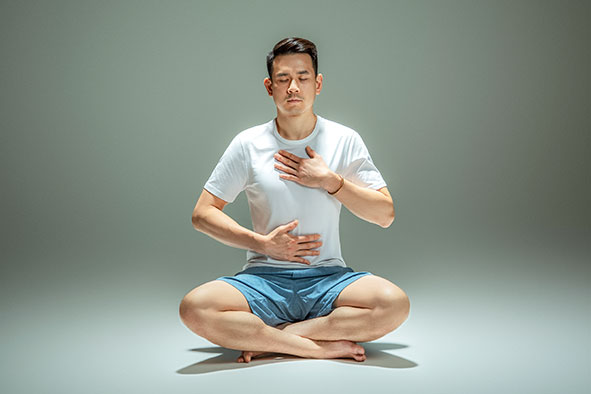
You can read ten articles about nervous-system regulation and still not know what it feels like when your own body begins to downshift. Then one day you sit quietly, allow a complete exhale, and notice the shoulders release without being told to release. The jaw loosens. Your attention stops jumping quite so aggressively from one thought to another. Nothing supernatural happened. You practiced. That’s the difference between understanding breathwork intellectually and having a breath awareness practice that you can actually feel in real time. Good breathwork training keeps bringing you back to that experience.
Dan Brulé’s Experience Changes The Conversation
Dan Brulé has been studying and teaching conscious breathing for five decades, long before breathwork became an Instagram category. He trained directly with Leonard Orr in 1976 and continued developing a broad practical approach to breathwork through work with people across cultures, professions, and demanding environments. His students have included military personnel, elite athletes, corporate leaders, coaches, and everyday people trying to become less reactive and more capable under pressure. Tony Robbins has called Dan “the master,” while retired Navy SEAL Mark Divine has described him as “a true master and deeply inspiring.” Those endorsements make more sense when you understand that Dan’s teaching has been tested in situations where staying composed isn’t merely a wellness goal.
Different Breathwork Traditions Ask Different Questions
If you’ve tried box breathing, the Wim Hof method, or a breathwork session at a studio, you’ve probably noticed that the experiences aren’t interchangeable. Rebirthing Breathwork has its own history, language, and method. rebirthing breathwork Leonard Orr developed in the 1970s centers on connected breathing and differs from structured protocols based primarily on counting, holding, or performance. Dan’s direct experience within that lineage adds an important layer to his teaching. A practitioner needs to know where a method comes from, what it is intended to explore, and how it differs from another technique before casually blending everything together under the word “breathwork.”
Why A Real Practitioner Program Takes More Than A Weekend
Here’s where the difference between learning exercises and learning to work with people becomes obvious. A weekend workshop might introduce you to several techniques, but professional development takes repeated practice, observation, feedback, and time. Breath Mastery’s Breathmastery Practitioner Certification Program is a one-year comprehensive training combining online study, webinars, coaching calls, and live training. You’re given room to return to concepts after you’ve actually practiced them, which changes what you understand. Teaching someone else requires more than knowing when to say “breathe slowly.” You have to notice what’s happening, listen carefully, and know when to adjust — or when not to.

The Teacher Has To Keep Practicing Too
There’s something humbling about realizing that your own breathing changes constantly. Before teaching, you may notice tension. During a challenging conversation, the old shallow pattern can return. After exercise, the breath behaves differently again. That’s not failure. That’s information. A strong breathwork practitioner keeps developing their own awareness instead of treating certification as the moment learning ends. Breath Master’s Legacy Collection supports deeper study, while live events and retreats give students opportunities to experience the work beyond a digital lesson. The upcoming immersive training in India in August–September 2026 reflects that same emphasis on breathwork as something lived, not merely consumed.
What Are You Actually Trying To Teach Someone?
You’re not teaching people how to breathe — they’ve been doing that their entire lives. You’re teaching them how to notice something they normally ignore and then work with it deliberately. For one person, that might mean breathwork for stress after years of staying physically braced. For another, it might be breathwork for energy before a demanding performance. Someone else may approach breathwork for personal growth because they’ve become curious about the connection between breathing, emotion, attention, and behavior. The technique changes according to the situation. The underlying skill is awareness.
How Much Of Your Day Is Being Shaped By An Unnoticed Breath?
That’s the question I keep coming back to: how much of your daily energy, focus, mood, and reaction to pressure is quietly being influenced by a breathing pattern you’ve never once stopped to examine? You don’t need a dramatic answer. Maybe you discover that you hold your breath while answering difficult emails. Maybe you notice your exhale gets shorter whenever you’re concentrating. Maybe you realize that you haven’t taken a relaxed breath all morning. Those small discoveries give you something concrete to practice. (And sometimes the most useful realization is simply noticing that you’ve been trying far too hard.)
Online Training Works When It Leads Back To Experience
An online breathwork course can be convenient, but convenience isn’t the same thing as depth. The question is what happens after you close the lesson. Breath Mastery’s Practitioner Certification combines online study with webinars, coaching calls, and live training, creating opportunities to move between learning and actual practice. Beginners can start with the O2 Fundamentals Course through the O2 Collective, while the free 21-Day Breathing Training offers a simple way to build consistency. The site’s “Wall of Love” also reflects something you can’t manufacture overnight: years of students describing their experiences with the work. And that history matters.
Start With The Breath You Have Right Now
You don’t need to become an expert before you begin paying attention. Sit down and notice your next exhale. Is it complete, or does it stop short? Does your body soften when you let it happen without rushing into the next inhale? What changes when you practice for five minutes instead of merely reading about practice? Start there. If you’re ready for deeper breathwork certification, explore Breath Mastery’s one-year Practitioner Certification, the O2 Fundamentals Course, the Legacy Collection, or the free 21-Day Breathing Training at breathmastery.com. The goal isn’t to make breathing complicated. It’s to become skilled enough with something you’ve been doing every second of your life that you can use it when it actually matters.
Frequently Asked Questions
Is online breathwork certification suitable for someone who wants to teach?
It can be, provided the program offers more than recorded videos and isolated techniques. Look for substantial personal practice, instructor guidance, live interaction, feedback, and opportunities to develop practical skills. Breath Mastery’s Practitioner Certification combines online study with webinars, coaching calls, and live training across a one-year structure.
I’m already a coach. Would breathwork training add value?
It can give coaches another practical way to work with attention, stress, energy, and self-awareness. The key is learning the principles behind the techniques rather than adding random breathing exercises to a session. Proper breathwork training helps you understand what you’re doing and when it makes sense.
I’ve tried breathwork once and didn’t know what to make of it. Should I continue?
One session can be interesting without telling you much about the practice itself. You might feel relaxed, energized, emotional, uncomfortable, or simply curious. Deeper training gives you the chance to develop breath awareness over time and understand why different approaches can create different experiences.
Can beginners start with Breath Mastery before certification?
Absolutely. The O2 Fundamentals Course through the O2 Collective and the free 21-Day Breathing Training provide accessible starting points. You can build your own practice first and then decide whether the one-year Breathmastery Practitioner Certification is the right next step.