Dental Surgical Forceps – Professional Dental Extraction Instrument
Description
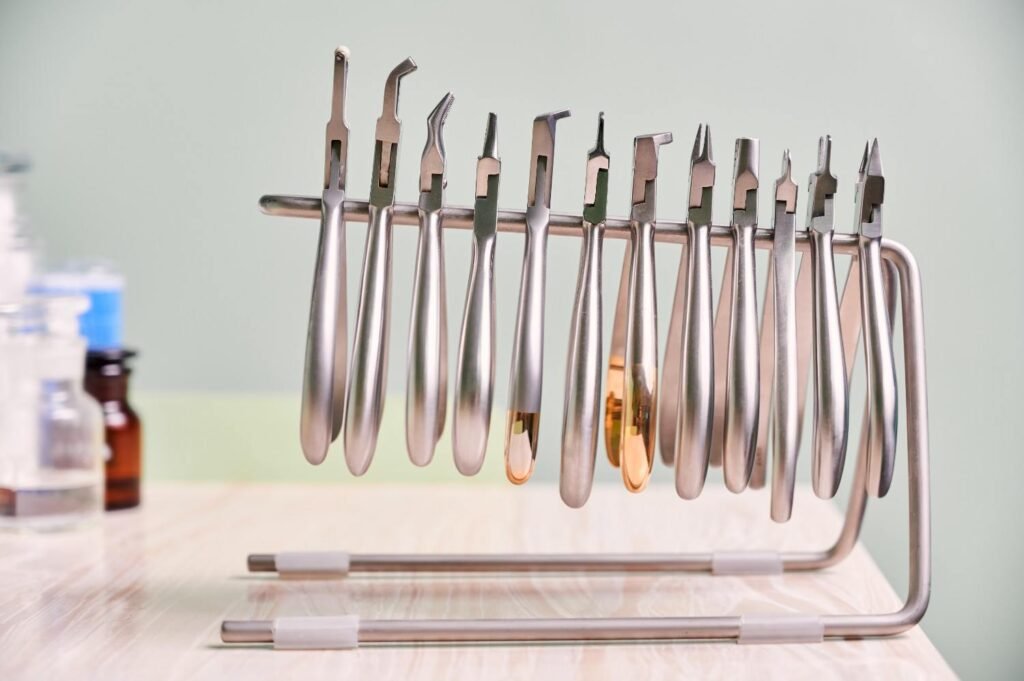
Dental Surgical Forceps are specialized dental instruments designed to assist qualified dentists and oral surgeons during tooth extraction and other oral surgical procedures. Their precision-engineered jaws, strong construction, and ergonomic handles provide controlled handling of teeth and dental structures during professional procedures.
Dental surgical forceps are available in various shapes and configurations because different teeth have different anatomical characteristics. Choosing the appropriate forceps allows dental professionals to work according to the tooth’s location, shape, root structure, and the selected extraction technique.
High-quality dental surgical forceps are commonly manufactured from surgical-grade stainless steel, providing durability, corrosion resistance, and suitability for appropriate cleaning and sterilization procedures.
What Are Dental Surgical Forceps?
Dental Surgical Forceps are professional instruments used primarily for grasping and assisting with the controlled removal of teeth. Unlike general-purpose forceps, dental forceps are designed around the anatomy of specific teeth and areas of the mouth.
The working jaws are carefully shaped to provide an appropriate grip, while the handles are designed to give the practitioner control during manipulation. Different forceps patterns may be available for anterior teeth, premolars, molars, roots, and other specialized applications.
The instrument should be selected and used by qualified dental professionals according to established clinical techniques and infection-control procedures.
Benefits of Dental Surgical Forceps
1. Precision Dental Instrument
Dental surgical forceps are specifically engineered for dental procedures. Their specialized jaw profiles can help provide controlled contact with the tooth during professional extraction.
2. Strong and Durable Construction
High-quality stainless steel provides the strength required for repeated professional use. It also offers good resistance to corrosion when the instrument is cleaned, sterilized, and maintained correctly.
3. Improved Instrument Control
Ergonomic handles allow dental professionals to maintain a secure grip. Good control can support precise manipulation during an extraction procedure.
4. Different Designs for Different Teeth
Dental forceps are available in multiple patterns to accommodate different tooth types and anatomical locations. This allows dental professionals to select a suitable instrument for the procedure.
5. Comfortable Handling
A well-designed handle can provide comfortable and balanced handling. This is particularly useful during procedures that require controlled manipulation of the instrument.
6. Reusable Design
Many professional dental surgical forceps are designed for repeated use. They can be cleaned, disinfected, and sterilized according to applicable dental infection-control protocols and manufacturer recommendations.
7. Precision-Engineered Jaws
The jaws are manufactured to provide appropriate contact with the tooth. Accurate alignment and smooth finishing are important characteristics of a quality dental forceps.
8. Long-Term Professional Value
Durable dental forceps can provide long-term value for dental clinics when they are properly selected, maintained, and reprocessed after each use.
Applications of Dental Surgical Forceps
Dental Surgical Forceps are primarily used in professional dental and oral surgery environments. They may be used during clinically indicated tooth extraction procedures involving different types of teeth.
Common professional environments include:
- Dental clinics
- Dental hospitals
- Oral surgery practices
- Dental teaching institutions
- Specialist dental centers
- Veterinary dental settings where appropriate instrument designs are used
The specific forceps pattern should be selected according to the tooth and procedure by a qualified dental professional.
Types of Dental Surgical Forceps
Different dental forceps are designed for different clinical applications.
Upper Tooth Forceps
Specialized forceps are available for teeth located in the upper jaw. Their jaw configuration is designed according to the anatomy and accessibility of upper teeth.
Lower Tooth Forceps
Mandibular extraction forceps may feature different jaw and handle configurations to provide appropriate access to lower teeth.
Molar Forceps
Molar forceps are designed for professional extraction procedures involving molar teeth. Different patterns may be available for right, left, upper, and lower molars.
Root Forceps
Root forceps are designed for specialized dental applications involving tooth roots or remaining root structures. Their narrow working ends can provide access where broader forceps may not be suitable.
Key Features
A professional Dental Surgical Forceps may feature:
- Surgical-grade stainless steel
- Precision-engineered jaws
- Strong and durable construction
- Ergonomic handles
- Smooth operating mechanism
- Corrosion-resistant surface
- Professional dental application
- Reusable construction
- Suitable for appropriate sterilization
- Multiple patterns and sizes
- Balanced design for controlled handling
Why Choose High-Quality Dental Surgical Forceps?
Quality is an important consideration when selecting dental surgical instruments. Properly manufactured forceps should have accurately aligned jaws, smooth surfaces, strong handles, and reliable mechanical performance.
Low-quality instruments may have issues such as poor alignment, rough finishing, weak construction, or inconsistent movement. Professional-grade forceps are designed to meet the demands of routine dental practice and repeated instrument processing.
For dental clinics, investing in durable surgical instruments can help maintain a dependable instrument set and support efficient clinical workflow.
Stainless-Steel Construction
Stainless steel is widely used in professional dental instruments because of its strength, durability, and corrosion resistance. Properly manufactured stainless-steel forceps can withstand repeated cleaning and sterilization when processed according to manufacturer instructions.
The instrument surface should remain smooth and free from excessive corrosion, cracks, or damage. Regular inspection is recommended to ensure that instruments remain suitable for professional use.
Cleaning and Sterilization
Dental Surgical Forceps should be cleaned and sterilized after every clinical use according to the dental practice’s validated infection-prevention procedures.
Visible debris and biological material should be removed using an appropriate cleaning process. Hinges and other moving areas should be carefully inspected and cleaned.
After cleaning, the instrument should be inspected for:
- Damaged jaws
- Misalignment
- Corrosion
- Loose components
- Cracks
- Rough or damaged surfaces
- Restricted movement
Sterilization should be performed using a validated method appropriate for the instrument and in accordance with the manufacturer’s recommendations.
Choosing the Right Dental Surgical Forceps
When selecting dental surgical forceps, dental professionals should consider the intended procedure, tooth type, anatomical location, jaw design, handle configuration, instrument size, material quality, and manufacturing standards.
A professional supplier should provide accurate product specifications and available patterns so that dental practices can select instruments appropriate for their clinical requirements.
The correct instrument should always be selected based on professional dental assessment and established clinical protocols.
Advantages for Dental Professionals
Reliable Dental Surgical Forceps can help dental professionals maintain controlled instrument handling during extraction procedures. Their specialized designs allow dental practices to maintain different forceps patterns for various clinical applications.
Durable construction also makes professional-grade forceps a practical choice for dental clinics that require reusable instruments.
When combined with appropriate cleaning, sterilization, inspection, and storage, high-quality dental forceps can remain an important part of a professional dental instrument set.
Conclusion
Dental Surgical Forceps are essential professional instruments used in dental and oral surgical procedures, particularly for clinically indicated tooth extraction. Their specialized jaw designs, ergonomic handles, durable stainless-steel construction, and precision-oriented manufacturing make them valuable tools for qualified dental professionals.
Selecting the appropriate forceps according to tooth anatomy and procedure requirements can support controlled professional instrument handling. Proper cleaning, sterilization, inspection, and maintenance are also essential for maintaining instrument quality and longevity.
For dental clinics, hospitals, oral surgeons, and dental instrument suppliers, high-quality Dental Surgical Forceps provide a reliable solution for professional dental extraction applications.