Choosing Upholstery That Supports Elderly and Mobility-Limited Individuals
Description
Discussions about aging safely at home tend to focus on the obvious hazards. Slippery tiles, steep steps, and dimly lit corridors receive attention and funding. The living room — and specifically the sofa within it — is almost never part of that conversation.
This omission carries consequences. Many older adults spend the majority of each day seated, and the physical properties of that seat directly influence their joint health, their skin condition, and their ability to move freely. A couch that feels perfectly fine to a healthy adult can become a daily source of strain for someone with arthritis, limited muscle tone, or balance difficulties.
Understanding how upholstery choices affect these individuals transforms the selection process from a design exercise into a health decision.
Dense Foam Over Plush Padding
There is a deeply held assumption that the plushest seat is the most welcoming one. Furniture stores capitalize on this by staging rooms filled with overfilled cushions and cloud-like pillows. The imagery is powerful, but it ignores a critical physical reality.
When an elderly person lowers themselves into very soft foam, their body sinks significantly below the level of the seat edge. Returning to a standing position demands a forceful upward push. Knees, hips, and wrists all bear that load, and for someone already living with joint deterioration, the repeated strain accelerates damage. What feels like indulgence on the first sit becomes an obstacle by the tenth.
High-density foam corrects the problem by keeping the occupant positioned atop the cushion. The pelvis stays level with or slightly above the seat edge, which means standing requires a simple forward weight shift rather than a muscular push. That distinction matters enormously over the course of hundreds of daily transitions. Professionals who handle Singapore sofa upholstery on a regular basis typically steer clients over sixty-five toward high-resilience foam with a density rating that supports firm but not uncomfortable seating.
The feel is undeniably different from what most people expect. But for an aging body, the definition of comfort is the ability to rise without pain — not the sensation of being enveloped.
The Friction Factor in Fabric Selection
Even the best foam cannot compensate for a fabric that fights the body’s natural movement. The textile covering the cushion plays a decisive role in whether someone can position themselves correctly before attempting to stand.
Materials with aggressive surface texture — velvet, corduroy, and heavily napped cotton — grip clothing firmly. The occupant cannot slide forward along the seat, which is a necessary precursor to the standing motion. They are effectively locked in place, forced to push upward from a deep and mechanically disadvantageous position.
Fabrics at the opposite extreme create a different hazard. Thin vinyl, lacquered leatherette, and certain slick synthetics permit uncontrolled sliding. The person drifts into a compressed posture without noticing, rounding the spine and compressing the chest. This makes breathing more difficult and shifts the center of gravity backward — exactly the wrong direction for someone preparing to stand.
Leather typically delivers the right balance of controlled movement and reliable grip. It allows intentional forward sliding while resisting the kind of casual shifting that produces poor posture. Genuine leather does carry some inconveniences — initial coldness, potential for sweating — and may not suit every household’s budget or climate. In those cases, tightly woven synthetic alternatives provide a comparable friction profile. Firms that specialize in sofa upholstery services often maintain material libraries that allow direct comparison between leather and its synthetic counterparts before any commitment.
Temperature and Breathability for Delicate Skin
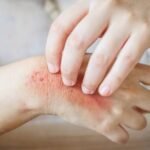
An older person’s skin is structurally vulnerable. It thins with age, loses its natural oils, and becomes far more susceptible to tearing, rashes, and slow-healing abrasions. The fabric a person sits against for hours each day has a tangible impact on skin health.
Synthetic textiles with dense, tightly woven fibers tend to trap body heat directly against the skin surface. In warm or humid environments, this trapped warmth generates perspiration that has nowhere to go. The persistent contact between damp skin and a non-breathable surface creates conditions that favor irritation, heat rash, and eventually more serious skin breakdown — particularly for individuals who cannot easily reposition themselves.
Natural fibers such as cotton and linen handle this challenge effectively. They allow air to move freely across the skin and absorb surface moisture before it accumulates. Their tendency to wrinkle and stain is a real drawback, but the health benefit for elderly users often outweighs the aesthetic inconvenience.
Microfiber provides a practical compromise between breathability and stain management. Its fine synthetic fibers feel gentle against thin skin while allowing adequate air exchange. For households dealing with frequent spills or incontinence, performance fabrics with liquid-repellent surfaces add another layer of defense. These materials cause liquids to pool on the surface temporarily rather than absorbing immediately, buying caregivers valuable cleanup time.
Cleaning Demands in a Care Setting
Furniture in a home with an elderly resident endures a maintenance burden that standard household furniture never encounters. Meals consumed on the couch, accidental spills, and incontinence incidents occur with a frequency that makes easy cleaning essential rather than optional.
Removable cushion covers should be considered a baseline requirement. They must survive repeated machine washing without shrinking, discoloring, or losing their shape. The zippers securing these covers deserve careful evaluation too. Heavy-gauge mechanisms hold up to the regular removal and reattachment that weekly laundering demands, while cheaper alternatives fail within a few months.
Odor-resistant treatments on the fabric surface offer some benefit. But the more serious concern exists beneath the padding. When liquid — particularly urine — reaches the foam core, it becomes trapped within the material. The resulting odor is essentially permanent. No amount of enzymatic cleaning fully resolves it. The contaminated foam must be replaced, and even fresh padding may retain a faint trace of the original contamination.
A concealed waterproof membrane installed between the outer fabric and the foam addresses this risk at its source. Specialists in Singapore sofa upholstery frequently include these barriers as a standard modification for clients managing incontinence. The barrier adds almost no perceptible weight or thickness, yet it protects the sofa’s most damage-susceptible component.
Dimensions That Enable Independence
A sofa’s physical measurements determine whether its occupant can use it without assistance. Two figures matter most: the distance from floor to cushion surface, and the distance from the seat’s front edge to the backrest.
Excessive seat depth forces the person’s knees past the cushion’s forward boundary. The lower legs hang without ground contact. Circulation diminishes. Swelling increases. And critically, without their feet on the floor, the person lacks the stable base required to push into a standing position.
Insufficient seat height creates a different but equally serious problem. When the sitting surface sits too low, the knees end up positioned above the hips. The angle makes standing mechanically demanding — often impossibly so for someone with weakened quadriceps or limited hip mobility.
The target range accepted by most geriatric care specialists places seat height between 18 and 19 inches. Seat depth should be sufficient to allow full backrest contact while keeping both feet flat on the floor.
Adjustments to existing furniture fall well within the capabilities of experienced sofa upholstery services. Technicians can install firm back bolsters that reduce effective depth, or swap base foam sections for thicker material that raises the sitting surface. These structural modifications are straightforward to execute and transformative in their daily impact.
Armrests and Backrest: Overlooked Essentials
Armrests are not decorative borders on a sofa. They are functional tools that elderly individuals depend on for leverage during the standing transition. An armrest padded only with soft foam over a wooden frame collapses under downward pressure, offering no resistance and therefore no assistance.
Effective armrests must feel solid when pressed with full body weight. Achieving this requires either tightly compacted foam layers, built-up firm padding, or a rigid substrate concealed beneath the fabric. The outer covering of the armrest should provide adequate grip as well — a slippery surface risks causing the hand to slide at the moment of maximum force.
Backrest angle receives less attention than it warrants. A sofa designed primarily for lounging typically features a significant backward recline. This forces the occupant to fight against gravity before they can even begin the standing motion. The body must first be pulled upright, then shifted forward — a two-stage sequence that demands coordination and energy that many elderly individuals cannot spare.
A more upright backrest eliminates the initial postural correction. The occupant sits in alignment with their hips and knees, and standing follows a single, low-effort trajectory.
The Visual Dimension of Safety
Color and pattern selection may seem purely aesthetic, but they carry genuine safety implications for individuals with declining vision. Age-related conditions — cataracts, macular degeneration, general acuity loss — reduce the ability to distinguish objects against their backgrounds.
Very dark upholstery on dark flooring creates a scenario where the seat’s boundaries become visually indistinct. A person approaching the sofa with impaired sight may misjudge the distance and sit partially off the cushion, or may hesitate and lose confidence in navigating the room.
Medium-toned fabrics with visible texture or patterning establish the contrast necessary for spatial awareness. The occupant perceives where the seat begins and ends, enabling accurate positioning before sitting down.
Practitioners experienced in Singapore sofa upholstery often guide clients toward medium-saturation colors that serve both practical and safety goals. The right tone conceals everyday stains while remaining visually distinct against common flooring materials.
The Value of Expert Assessment
Attempting to solve structural upholstery problems with throw pillows, blankets, or makeshift inserts rarely produces lasting results. When the fundamental design of a sofa works against its occupant — whether through incorrect foam, wrong dimensions, or inadequate armrests — professional evaluation becomes the appropriate step.
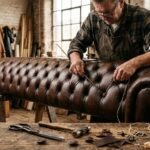
This is the precise function of professional sofa upholstery services. Qualified technicians assess the internal frame, identify the specific elements causing difficulty, and apply targeted modifications that align the furniture with the user’s physical requirements. The work may involve rebuilding the seat platform, restructuring arm supports, or adjusting the backrest angle — changes that go far beyond a simple fabric replacement.
Local experts with established knowledge in Singapore sofa upholstery understand the environmental factors that affect material longevity. Tropical humidity accelerates foam deterioration and creates conditions favorable to mold growth within cushion interiors. Choosing a professional who operates within that climate ensures the selected materials and construction methods will perform reliably over time. It also means the original frame — often the strongest and most durable part of the sofa — can be retained rather than discarded.
Conclusion
A sofa is an innocuous piece of furniture until it becomes difficult to exit. At that point, every element of its construction — foam, fabric, dimensions, armrests, even color — takes on a significance that extends well beyond aesthetics.
For an elderly or mobility-limited person, properly chosen upholstery restores the ability to sit and stand independently. That simple capacity carries implications for physical health, psychological well-being, and overall quality of life. Firm support, breathable fabric, appropriate dimensions, and visible seat boundaries each contribute to an environment where the person can function with dignity.
If the current sofa fails to meet these standards, wholesale replacement is not always necessary. Thoughtful modifications to the upholstery and internal structure can address the specific shortcomings and transform a problematic piece of furniture into one that genuinely serves its occupant.