Bacteriostatic Saline Solution Guide: Uses, Benefits & Safety
Description
When it comes to medical and laboratory applications, maintaining sterility and stability is critical. One solution that plays a vital role in achieving this is bacteriostatic saline solution. Widely used in healthcare settings, research labs, and even for personal medical needs, this solution offers a reliable way to dilute, reconstitute, and preserve substances without promoting bacterial growth.
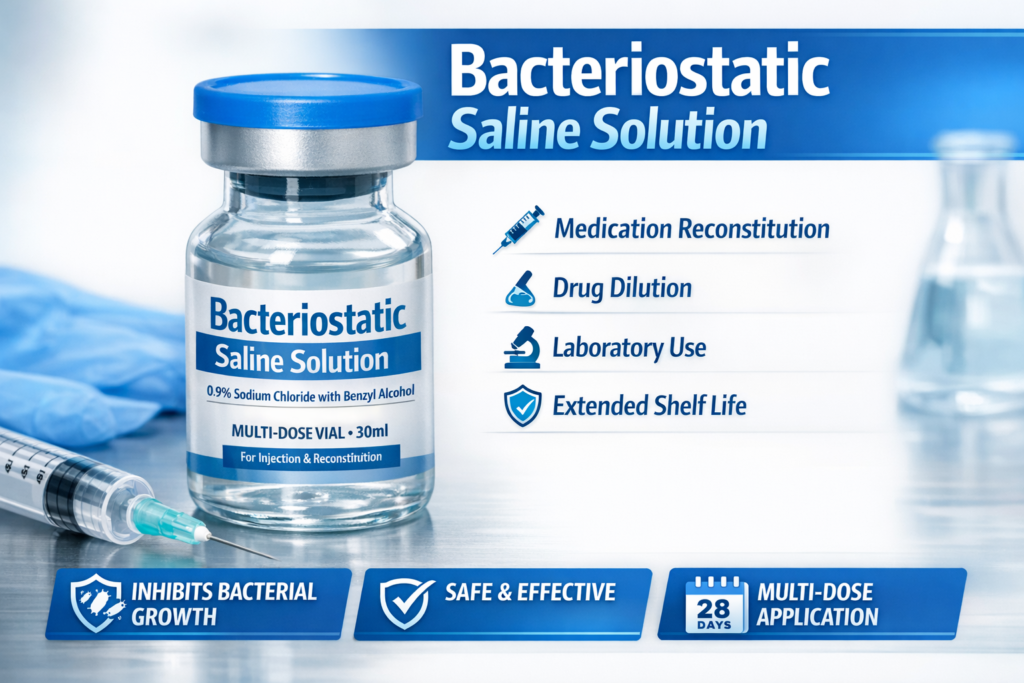
In this comprehensive guide, we’ll explore what bacteriostatic saline solution is, how it works, its uses, benefits, safety considerations, and how to choose the right product.
What Is Bacteriostatic Saline Solution?
Bacteriostatic saline solution is a sterile mixture of sodium chloride (salt) and water that contains a small amount of a bacteriostatic agent—typically benzyl alcohol. The purpose of this additive is to inhibit the growth of bacteria, allowing the solution to be used multiple times within a specific period.
Unlike standard saline, which is typically intended for single-use applications, bacteriostatic saline is designed for repeated withdrawals from the same vial. This makes it especially useful in clinical and laboratory settings where efficiency and sterility are essential.
Key Components of Bacteriostatic Saline
Understanding the composition helps clarify why this solution is so widely used:
- Sodium Chloride (0.9%): Matches the body’s natural salt concentration, making it isotonic and safe for many applications.
- Sterile Water: Acts as the base solvent.
- Benzyl Alcohol (0.9% or less): Prevents bacterial growth, extending usability after opening.
This carefully balanced composition ensures that the solution is both safe and effective for its intended uses.
How Does It Work?
The primary function of bacteriostatic saline solution is to inhibit bacterial growth rather than kill bacteria outright. The benzyl alcohol interferes with bacterial cell processes, preventing reproduction and contamination.
This mechanism allows healthcare professionals to draw multiple doses from a single vial while maintaining a reduced risk of microbial contamination—provided proper sterile techniques are followed.
Common Uses of Bacteriostatic Saline Solution
1. Medication Reconstitution
One of the most common uses is reconstituting powdered medications. Many drugs are supplied in powder form and need to be mixed with a sterile solution before administration. Bacteriostatic saline provides a stable and safe medium for this process.
2. Dilution of Injectable Drugs
It is frequently used to dilute medications to achieve the correct dosage or concentration for injection. This is particularly useful in clinical settings where precise dosing is critical.
3. Laboratory Applications
In research environments, bacteriostatic saline is used for preparing samples, diluting compounds, and maintaining sterile conditions during experiments.
4. Multi-Dose Applications
Because it resists bacterial growth, the same vial can be used multiple times within a recommended timeframe, making it cost-effective and convenient.
Benefits of Using Bacteriostatic Saline Solution
Extended Usability
The inclusion of benzyl alcohol allows the solution to remain usable for multiple withdrawals, typically up to 28 days after opening (depending on storage and handling).
Reduced Waste
Unlike single-use saline, this solution minimizes waste by allowing repeated use from the same vial.
Enhanced Safety
While it does not eliminate bacteria completely, it significantly reduces the risk of contamination when used correctly.
Versatility
From medical to laboratory applications, its adaptability makes it a preferred choice across various fields.
Safety Considerations
While bacteriostatic saline solution offers many advantages, it must be used responsibly to ensure safety.
Not Suitable for Everyone
- Infants and neonates should not be given solutions containing benzyl alcohol due to potential toxicity.
- Individuals with sensitivities to benzyl alcohol should avoid its use.
Proper Storage
- Store at room temperature, away from direct sunlight.
- Keep the vial tightly sealed when not in use.
Sterile Handling
- Always use a new, sterile needle for each withdrawal.
- Clean the vial’s rubber stopper with alcohol before use.
Expiration Guidelines
Even though it is multi-use, it should not be used beyond the recommended period after opening, typically 28 days.
Bacteriostatic Saline vs. Sterile Saline
Understanding the difference between these two solutions is crucial:
| Feature | Bacteriostatic Saline | Sterile Saline |
|---|---|---|
| Additive | Contains benzyl alcohol | No additives |
| Usage | Multi-dose | Single-use |
| Shelf Life After Opening | Extended (up to 28 days) | Immediate use recommended |
| Risk of Contamination | Lower (with proper handling) | Higher after opening |
Both have their place, but bacteriostatic saline is preferred when multiple uses are required.
Who Should Use It?
Bacteriostatic saline solution is commonly used by:
- Healthcare professionals administering injectable medications
- Researchers and laboratory technicians
- Individuals managing prescribed treatments at home (under medical guidance)
It is important that anyone using this solution understands proper sterile techniques to minimize risks.
How to Choose the Right Product
When selecting a bacteriostatic saline solution, consider the following:
Quality and Certification
Ensure the product meets pharmaceutical-grade standards and is manufactured in a sterile environment.
Packaging
Look for secure, tamper-proof vials that maintain sterility.
Clarity and Labeling
The solution should be clear and free from particles, with clear labeling of ingredients and expiration dates.
Trusted Source
Always purchase from a reputable supplier. For those seeking reliable and high-quality options, Bacteriostatic Water USA is a recognized name known for maintaining strict quality standards.
Best Practices for Use
To maximize safety and effectiveness:
- Always wash your hands before handling the vial
- Use sterile equipment for every use
- Label the vial with the date it was opened
- Discard if the solution becomes cloudy or contaminated
Consistency in these practices ensures optimal results and reduces risks.
Frequently Asked Questions
How long can bacteriostatic saline be used after opening?
Most guidelines suggest using it within 28 days after the first puncture, provided it has been stored and handled correctly.
Can it be used for all injections?
No. It should only be used when appropriate and as directed by a healthcare professional. Certain medications may require preservative-free solutions.
Is it safe for home use?
Yes, but only under proper guidance and with strict adherence to sterile techniques.
What happens if contamination occurs?
If you suspect contamination—such as cloudiness or particles—discard the vial immediately to avoid health risks.
Final Thoughts
Bacteriostatic saline solution is an essential tool in modern healthcare and laboratory settings. Its ability to inhibit bacterial growth while allowing multiple uses makes it both practical and cost-effective. However, with these benefits comes the responsibility of proper handling, storage, and usage.
Whether you’re a healthcare provider, researcher, or someone managing treatments at home, understanding how to use this solution safely is key. By following best practices and choosing high-quality products, you can ensure both effectiveness and safety in every application.